Stephan Balkenhol | Dan Graham

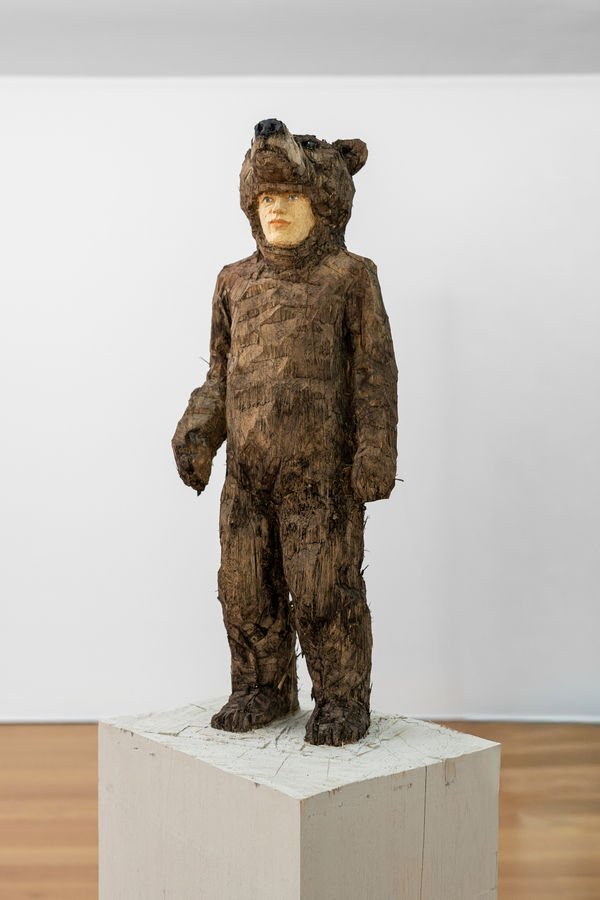
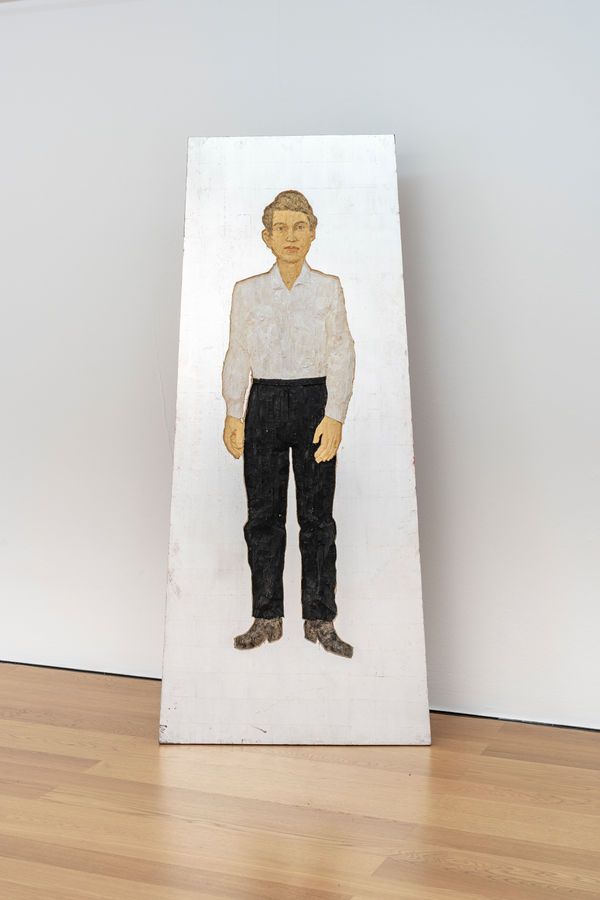
“It is something primal in human nature to explore and confirm reality and one's own existence through images – be they drawings, paintings, sculptures, photographs, etc. Why should this no longer be possible? That was and is the vision that has carried me through my creative process and continues to inspire me to this day. In doing so, I have avoided allowing sculpture to become a vehicle for sociological or religious messages, as was common in earlier centuries. My sculptures confront the viewer with openness and ambivalence and thus represent more of a question than an answer. It is only through the viewer's gaze that the sculpture is filled with content.”
– Stephan Balkenhol (studio talk, PArt Foundation / Spiegelberger Foundation, 2024)
“It would be a huge mistake to think that my work deals with alienation or that it even produces alienation. It basically is about games that children play between the age of two and three.”
– Dan Graham (in: “Bild - Erzählung - Öffentlichkeit. Die Galerie Rüdiger Schöttle,” edited by Heinz Schütz, Passagen Verlag, Vienna 2001)
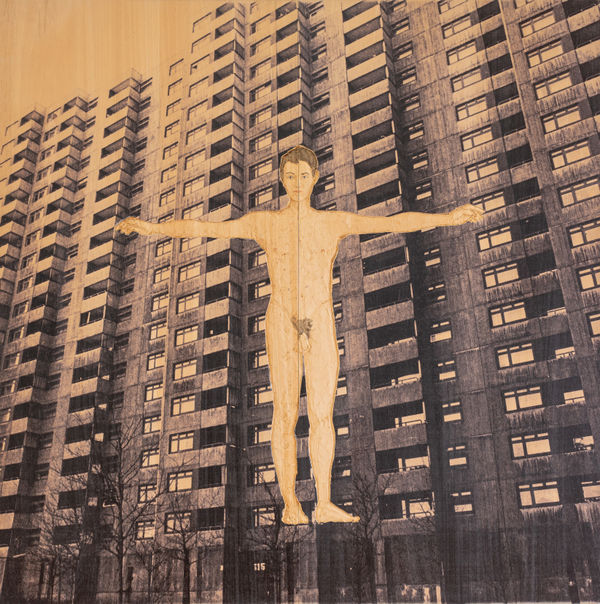
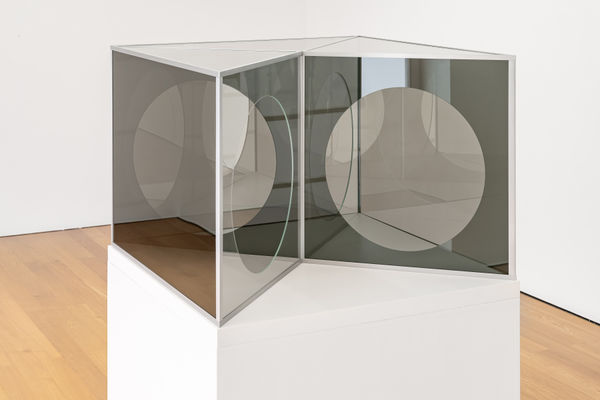
For the first time in history, works by Dan Graham (1942 in Urbana, Illinois, – 2022 in New York City, USA) will be juxtaposed with works by Stephan Balkenhol (*1957 in Fritzlar, DE). Both artists have been closely associated with the exhibition history of Galerie Rüdiger Schöttle since the 1980s, but their works have never been shown in tandem. In their sculptural works, Dan Graham and Stephan Balkenhol deliberately guide the viewer’s gaze and immediately confront it with itself—Graham by way of his mirror pavilions using their surroundings, and Balkenhol with his iconic figures that let the viewer seek eye contact in vain, thus promptly encouraging introspection.
Jeff Wall forged the bridge of this joint exhibition. In 1989, he collaborated with Dan Graham on a pavilion for children. While both artists share a conceptual approach, in the same year, Jeff Wall solidified his enthusiasm for the figurative movement—which at the time was still antithetical to conceptual art—and described Balkenhol’s figures as follows: “His monad is thus a counter-experimental form, obliged to interrogate the language of experimental sculpture, to contemplate its peculiar silences from the viewpoint of the familiar human body. This is a body which has been erased in the stresses of the struggle for the negation of oppressive, frightening statues, statues of Colossai” (from Jeff Wall, “An Outline of a Context for Stephan Balkenhol’s Work 1988,” published in the exhibition catalogue Stephan Balkenhol, Basel 1988).
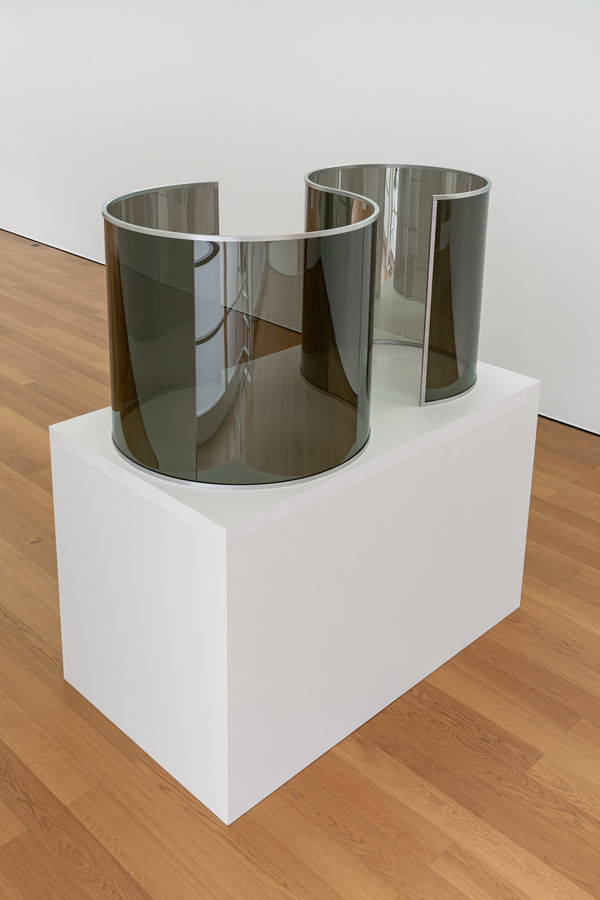
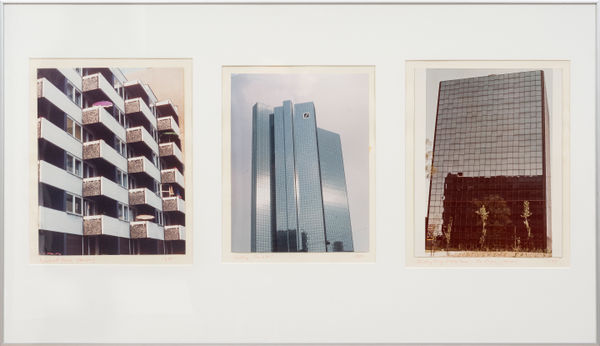
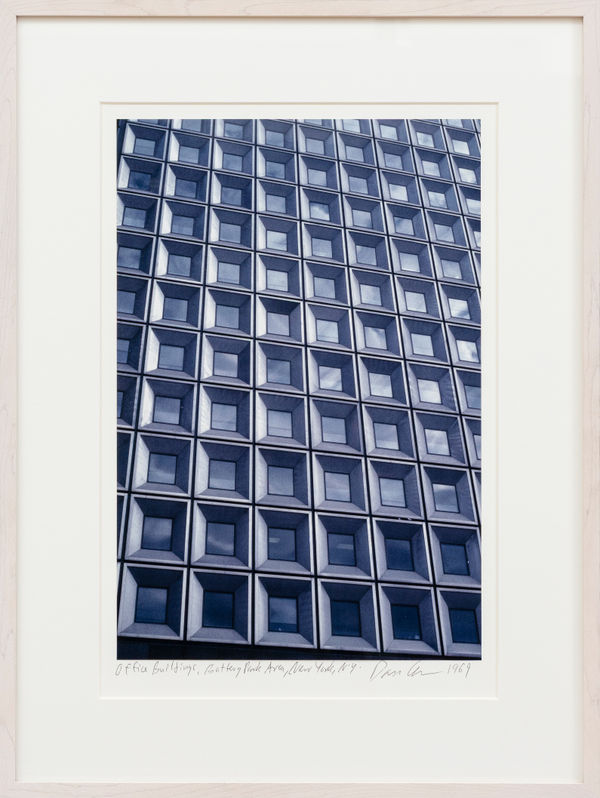
As different as Stephan Balkenhol and Dan Graham may seem in their formal modes of work, there are parallels in terms of content. Their works can be found in public spaces around the world, because at their core they foster encounters in social contexts. The two artists are connected by a deep engagement with European art history, which crystallizes primarily in their use of the mirror motif. Dan Graham’s oeuvre is often referred to as a “mirror of society,” as his works—especially his famous glass and mirror pavilions—encourage visitors to reflect on themselves and their surroundings in a dialectic process of seeing and being seen. These pavilions use two-way mirror glass, which can be both transparent and reflective, depending on the way the light hits it, thus allowing for reciprocity between the individual and the social, urban, or natural landscape. In this exhibition, models made of two-way mirror are displayed next to early photographs from New York and Europe.
These works are confronted with Stephan Balkenhol’s human figures, which he himself described as wooden mirrors. They convey a palpable unity of physical and mental presence and offer a projection screen that also serves as a reflexive element.